

A new way to explore the Moon
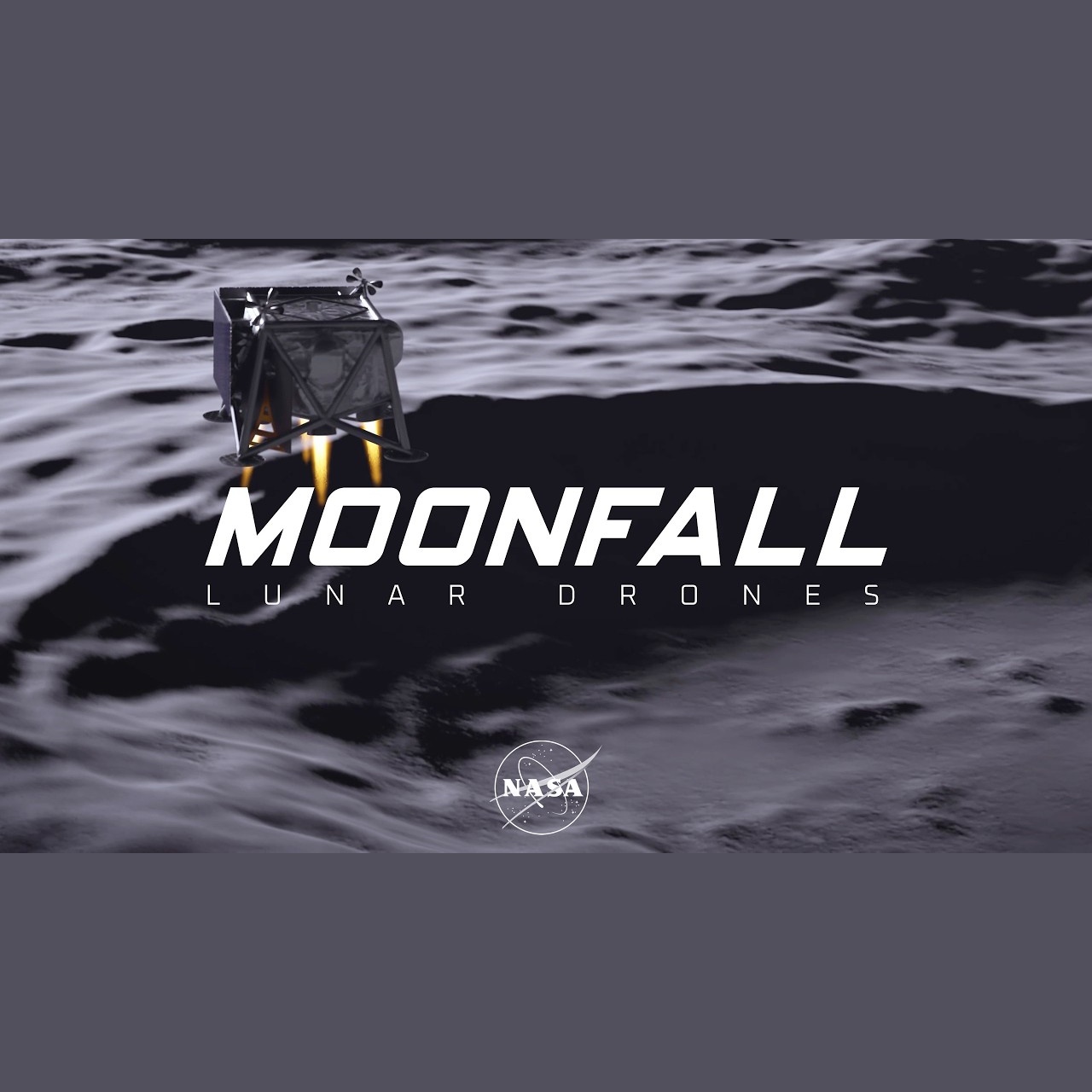
How do you explore rugged lunar terrain that is difficult to reach on wheels? NASA’s MoonFall mission is developing a different approach: small, independently operating spacecraft that use rocket propulsion to fly between locations on the lunar surface.
Join Dr Ian Clark of NASA’s Jet Propulsion Laboratory for an introduction to this ambitious project and the engineering challenges behind a new generation of mobile lunar explorers. MoonFall aims to survey potential Artemis landing sites near the Moon’s South Pole, gathering detailed information to support future science and human exploration.
About the Event
MoonFall’s propulsive drones are designed to make multiple flights during a single lunar day, capturing high-resolution imagery and investigating terrain that would be challenging for conventional surface vehicles. The mission’s planned instruments will help map the landscape, investigate subsurface water abundance and characterise the radiation environment.
Ian will introduce the project his team is developing and explore the considerations involved in delivering and operating these vehicles on the Moon. The evening will offer a fascinating opportunity to hear directly from someone working on a mission that could help shape how we explore the lunar surface.
Topics will include:
-
The MoonFall mission concept and its role in preparing for future lunar exploration.
-
The advantages and challenges of propulsive mobility on the Moon.
-
Delivering independently operating drones to the lunar surface.
-
Gathering detailed observations of potential landing sites and their surroundings.
Ian’s presentation will be online via Zoom. The presentation will be followed by questions and discussion.
Join us online via Zoom to hear about this remarkable project.
About the Speaker
 Dr. Ian Clark is an aerospace engineer at NASA’s Jet Propulsion Laboratory in Pasadena, California, whose work has focused on developing and testing technologies for planetary exploration. He is currently Chief Engineer for MoonFall, the mission developing propulsive drones to explore the lunar surface and survey potential landing sites for future human exploration.
Ian previously served as Principal Investigator for NASA’s Low-Density Supersonic Decelerator (LDSD) project, which investigated new ways to land heavier payloads on Mars. The programme tested large inflatable aerodynamic braking devices and supersonic parachutes in Earth’s upper atmosphere, recreating aspects of the conditions a spacecraft encounters when entering the thin Martian atmosphere.
His experience includes the demanding process of taking experimental technologies from design through flight testing, analysing their performance and addressing the challenges revealed along the way. During LDSD, he helped bring together specialists to investigate the behaviour of its enormous supersonic parachute and inform its redesign for subsequent testing. He brings that practical experience of pioneering planetary flight systems to the challenges of lunar exploration.
In 2012, Ian was awarded The Lew Allen Award for Excellence for exceptional leadership and achievement in the development of advanced Entry, Descent, and Landing (EDL) technologies.