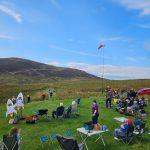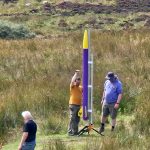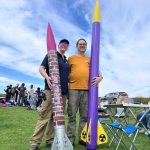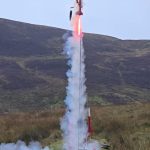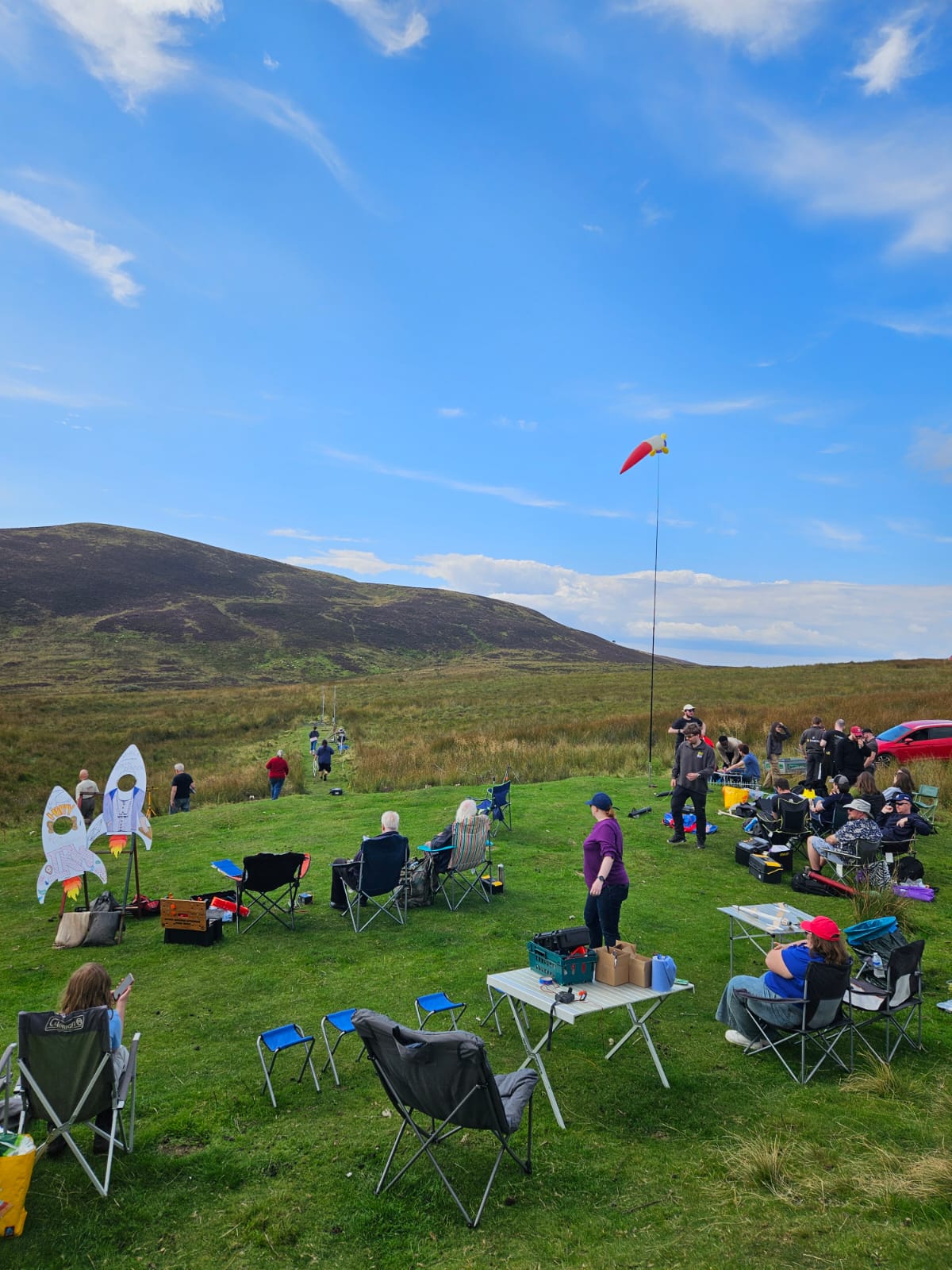
On Tuesday, 25th August, your correspondent packed his suitcase and headed for the Highlands – to be precise, Paisley, where he stayed with experienced rocketeer Rick Newlands, and Fairlie Moor, where the rocket flying for International Rocket Week 2026 took place. Many of the participants stayed at Lapwing Lodge, a Scout centre, (coincidentally named after a rocket motor!) where workshop facilities were also located. After a haggis supper, washed down with Irn Bru (Scotland’s other national drink!), your reporter prepared for a few days of rocket flying!
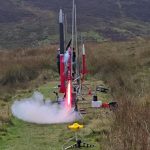
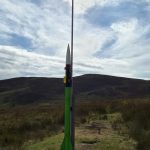
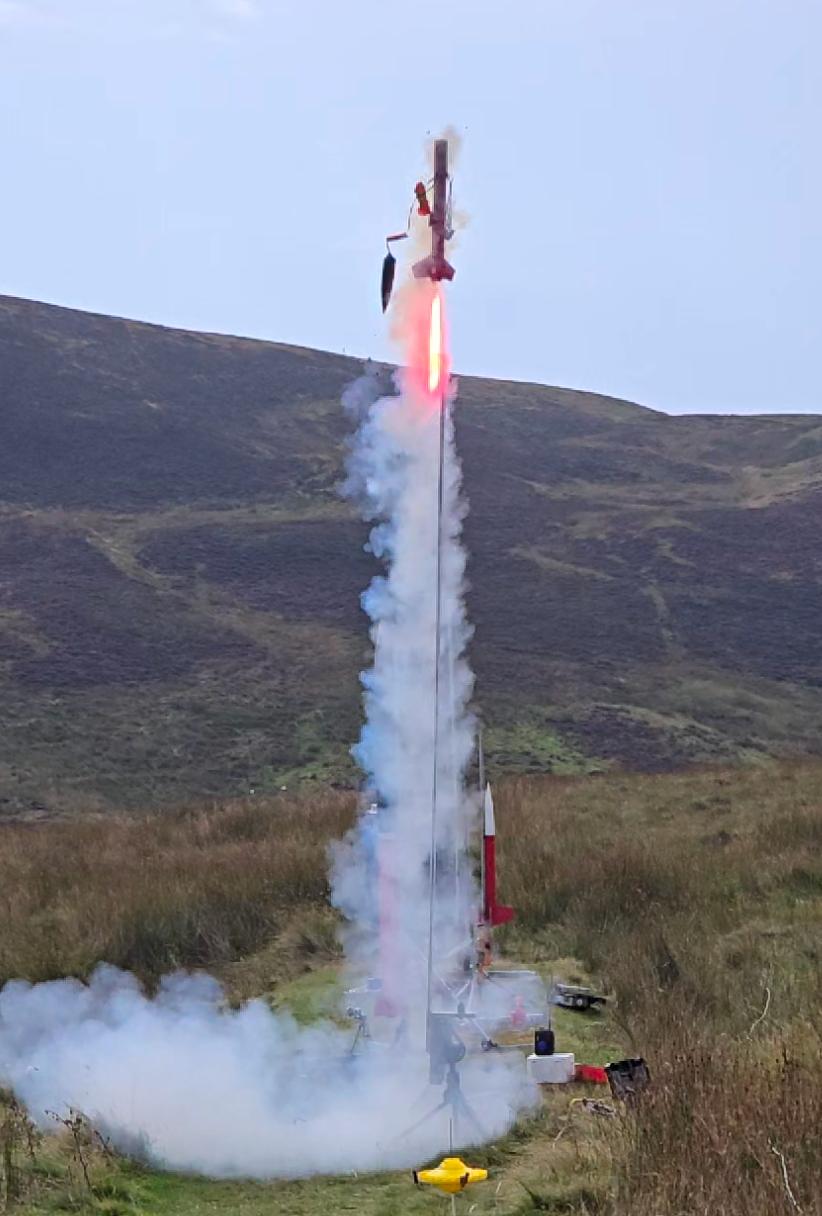
Wednesday dawned overcast with wind, low clouds, and a fine drizzle. Despite the weather, participating teams and individuals launched their rockets safely. Rocketeers ranged from those flying the smallest, kit-built rockets, to university teams flying large and sophisticated vehicles. Ten-year old Rory Fitzsimons, accompanied by his father, Mathew, flew a 3-engine cluster model rocket, powered by a trio of Estes A3 motors. Rory has been flying model rockets for a year now, and is already at a level of understanding that he could fluently discuss rocketry with university students!
Delft Aerospace Rocket Engineering (DARE) from Holland flew their “Brut” rocket, (named after the champagne, not the aftershave!) on an F50 motor, with some very sophisticated launch support and tracking hardware, such as a rocket equipped with a 3D GPS tracker and a video camera.
Glasgow University Rocketry were present, and your correspondent was delighted to see them again, having met this team the previous year. University rocketry societies are an excellent way for students to gain invaluable experience in aerospace engineering, tackling the sort of problems in aerodynamics, stressing, project management, and finance that they will encounter in industry, and learning how to work as a team – perhaps the most valuable lesson of all.
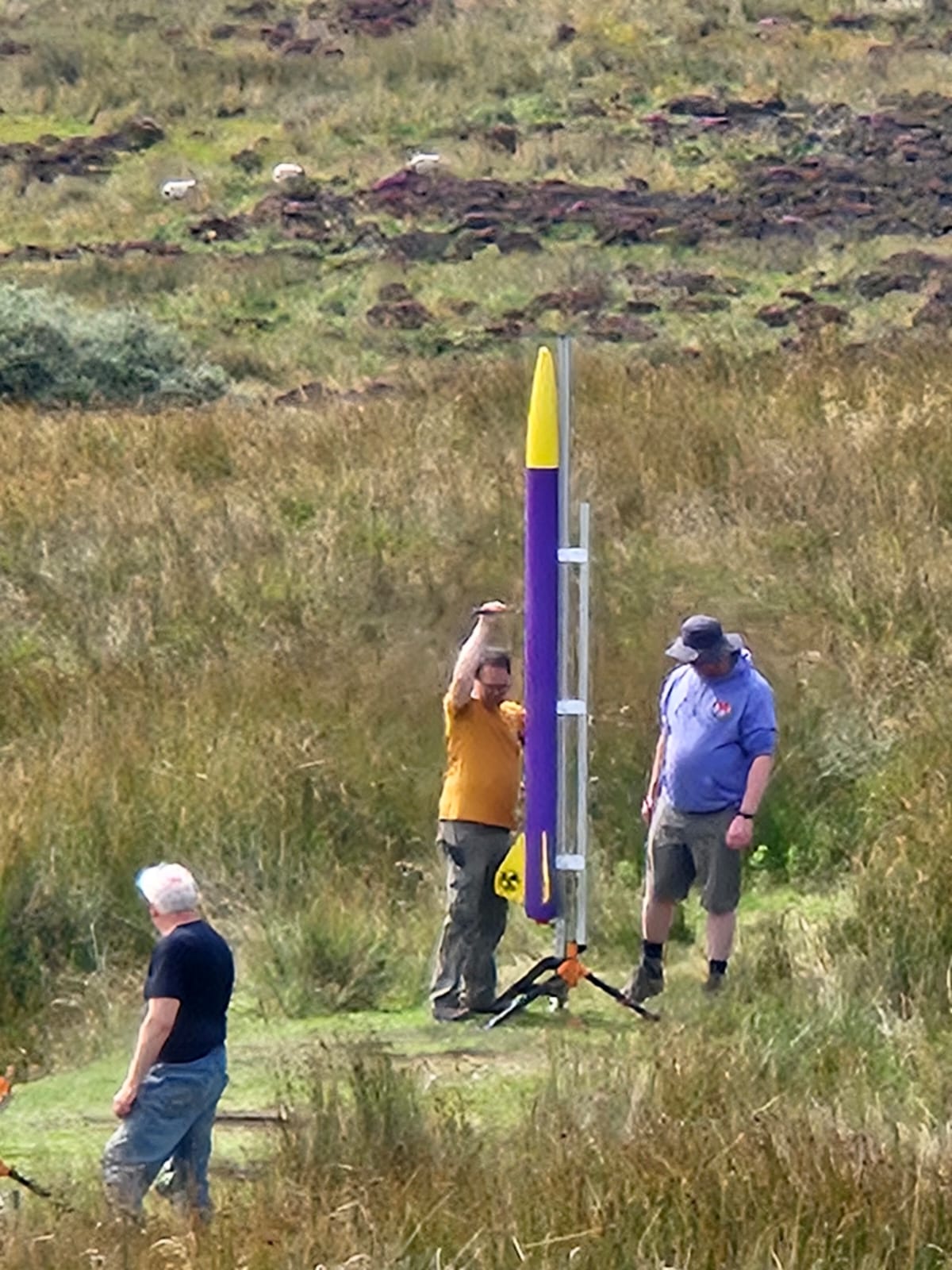
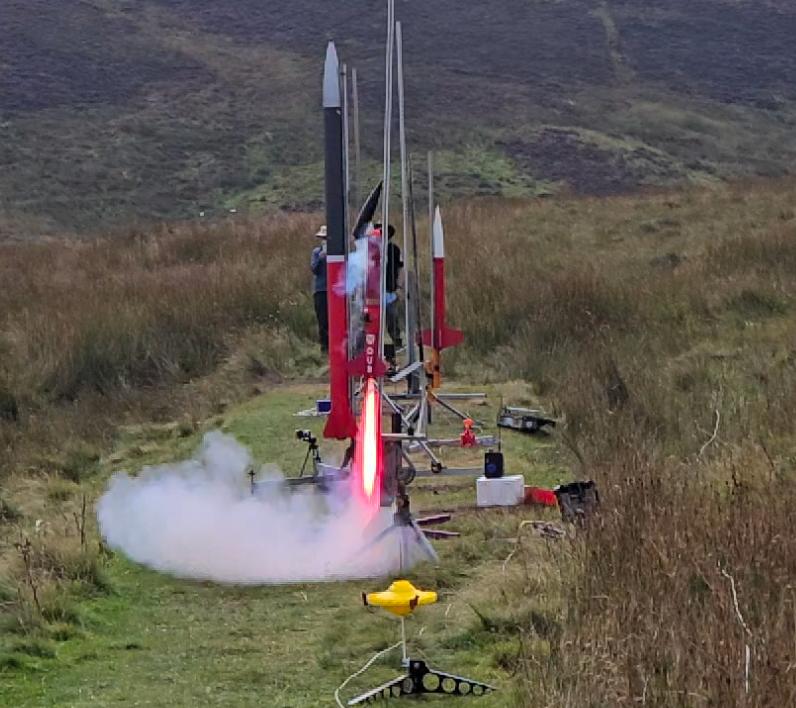
The next day, the Dutch team made their TRA 117 certification attempt, with an F50 motor, a maximum acceleration of 9g, reaching an altitude of 900 m with active tracking. Glasgow University Rocketry made two Level 1 (L1) certification attempts. Range Safety Officer (RSO) duties were ably handled by Rick Newlands, and active communications were maintained with Glasgow Air Traffic Control for designated launch windows and airspace clearance. Tracking systems were deployed across some flights, including 3D GPS trackers, telemetry beepers, and on-board video capture. A film crew from Scottish Television arrived to document the event, and interviewed Rick Newlands, and the Glasgow University team launched test vehicles.
This reporter asked the Glasgow University team a few questions about their rocketry activities, which the students were pleased to answer. Glasgow University Rocketry (GUR) has been in existence since 2019. They have tackled a number of high-power rocketry projects, and are working towards liquid-propellant rocketry. They are involved with the “Race2Space” educational initiative, in which student teams from across the United Kingdom and Ireland design, build, and hot-fire their hybrid and liquid-propellant rocket engines, in an effort to tackle the critical engineering skills gap of the UK space sector. GUR made engine tests both last year and this. Most of the team intend to work in the space industry.
Friday saw the launches of heavy M and L class motor rockets. One notable flight was that of “Potato Masher”, a rocket featuring 3D-printed grid fins, with estimated performance figures of 10,000 ft, an acceleration of 31g, with a simulated airspeed of Mach 1.2!
Your correspondent was also able to talk to Endeavour Rockets, Edinburgh University’s rocketry team, which was established in 2017. They are entering the European Rocketry Challenge, aiming for an 8 km altitude flight (this will be their third attempt, the previous flight failed to deploy its parachute). They have entered competitions, with L2 certification projects, and are active in Race2Space; they have conducted a 25 s burn of an engine using Nitrous Oxide as oxidiser and Iso-Propyl Alcohol (IPA) as fuel. Endeavour Rockets are entering the International Rocket Engineering competition, organised by the Experimental Sounding Rocket Association. This is the world’s largest university rocket engineering competition, which is held annually at Spaceport Midland, in Texas. Team members are actively pursuing placements in the space industry, with two alumni currently founding a space start-up.
The International Rocket Week ended with the traditional barbecue, ably organised by rocketeer Cath Bashford and her team. The whole event was a wonderful opportunity to catch up with old friends, to network, and gain valuable knowledge of rocketry, to enjoy the wonderful scenery of the Scottish countryside, and to have great fun flying rockets!
Report by Griffith Ingram