
Join the Open University’s, Professor David Rothery in a Fireside Chat with Jerry Stone for ‘BepiColombo: Europe’s Journey to Mysterious Mercury’
From icy polar craters to volcanic plains, Jerry and David will chat about ESA/JAXA’s mission to the inner edge of the Solar System. They will discuss why Mercury is so difficult to get to, necessitating multiple complicated gravity assists, and they will consider the latest flyby revelations, and science breakthroughs expected to open up Mercury’s hidden secrets, heralding BepiColombo’s orbital arrival at Mercury in 2026.
 Mercury is relatively little-discussed mainly because it is hard to see, hard to visit, and not linked to popular themes like the search for life or future human settlement. As a result, it has had fewer missions and less media attention than Mars, Jupiter, or Saturn. However, Mercury holds key clues to how rocky planets form, with its oversized iron core, global magnetic field, and volatile‑rich surface all challenging existing models. Modern and upcoming data from the MESSENGER and BepiColombo missions show that Mercury is a “world of extremes” with unique geology and polar ice deposits, so scientists expect its profile to rise as results accumulate.
BepiColombo is a joint European–Japanese mission to study Mercury’s surface, interior, exosphere, and magnetic environment in unprecedented detail. It consists of two orbiters that will separate once in Mercury orbit in November 2026: ESA’s Mercury Planetary Orbiter (MPO) and JAXA’s magnetospheric orbiter Mio. The mission aims to map Mercury’s surface and composition, probe its internal structure, and investigate its magnetic field and interaction with the solar wind. BepiColombo uses solar electric propulsion plus a series of planetary gravity‑assist flybys to slow down enough to be captured by Mercury’s gravity, which is much harder than flying past the planet.
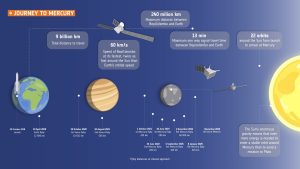
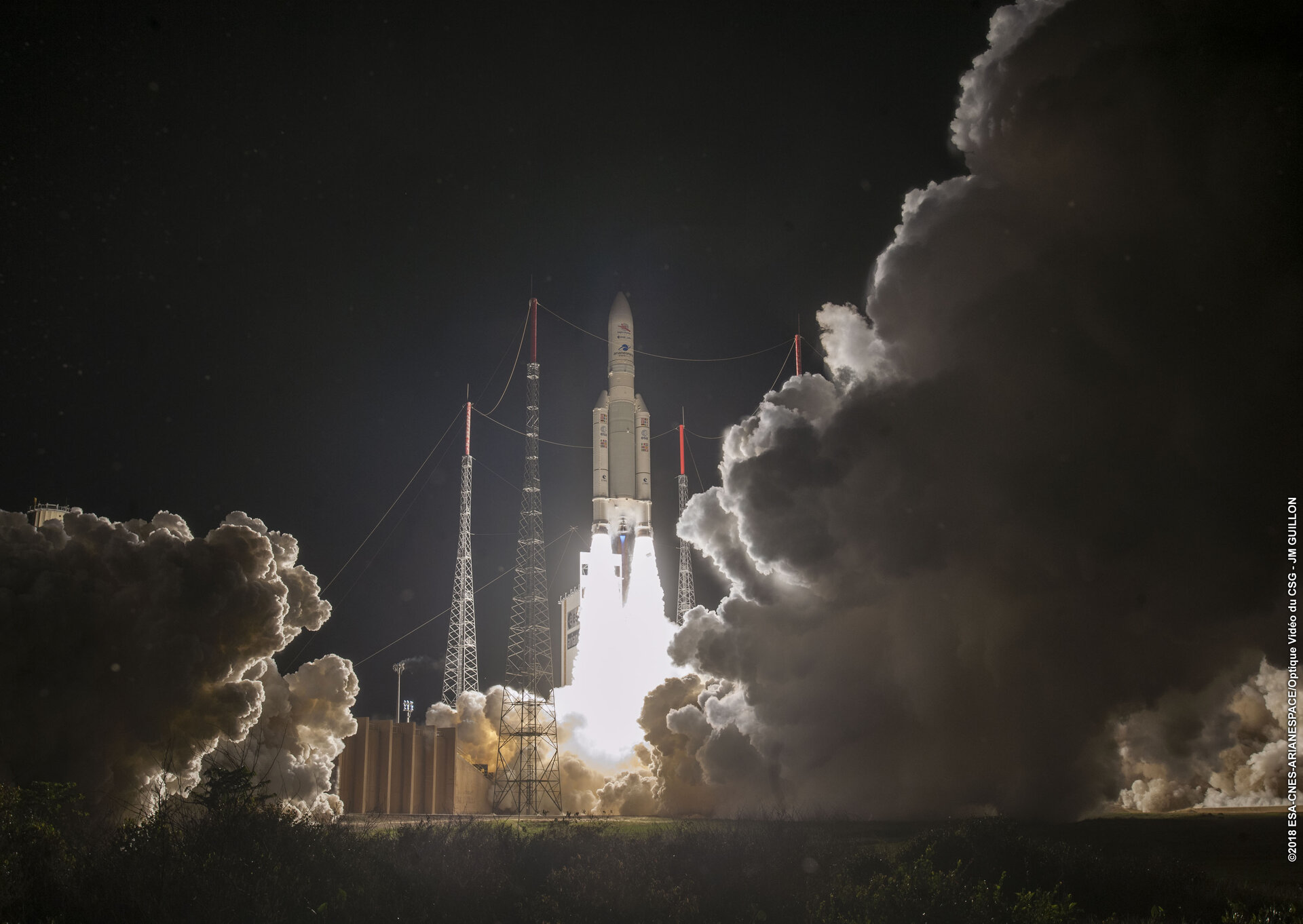
Launched atop an Ariane 5 from Kourou on 20 October 2018, BepiColombo made an Earth flyby to adjust the trajectory and energy in 2020 and two Venus flybys to further bend and slow the orbit towards Mercury in 2020 and 2021 before commencing a series of six Mercury flybys from 2021 to 2025, each refining the approach and providing early images and measurements. Mercury orbital insertion is planned for November 2026.
Speaker: Prof. David Rothery
 Professor David Rothery is one of the key science leaders on the ESA/JAX mission to Mercury, BepiColombo, focusing on Mercury’s surface and composition.
David serves as UK Lead Scientist / Lead Co‑Investigator on the UK‑led X‑ray instrument on the mission, MIXS (the Mercury Imaging X‑ray Spectrometer), which will map the chemical elements on Mercury’s surface using X‑ray spectroscopy. This makes him a central figure in defining and exploiting BepiColombo’s geological and compositional investigations.

He also co‑leads or chairs ESA’s Mercury Surface & Composition Working Group, which co-ordinates how BepiColombo will study Mercury’s geology, surface materials, and evolution. That role involves shaping observation plans and science priorities for the mission’s surface studies.