
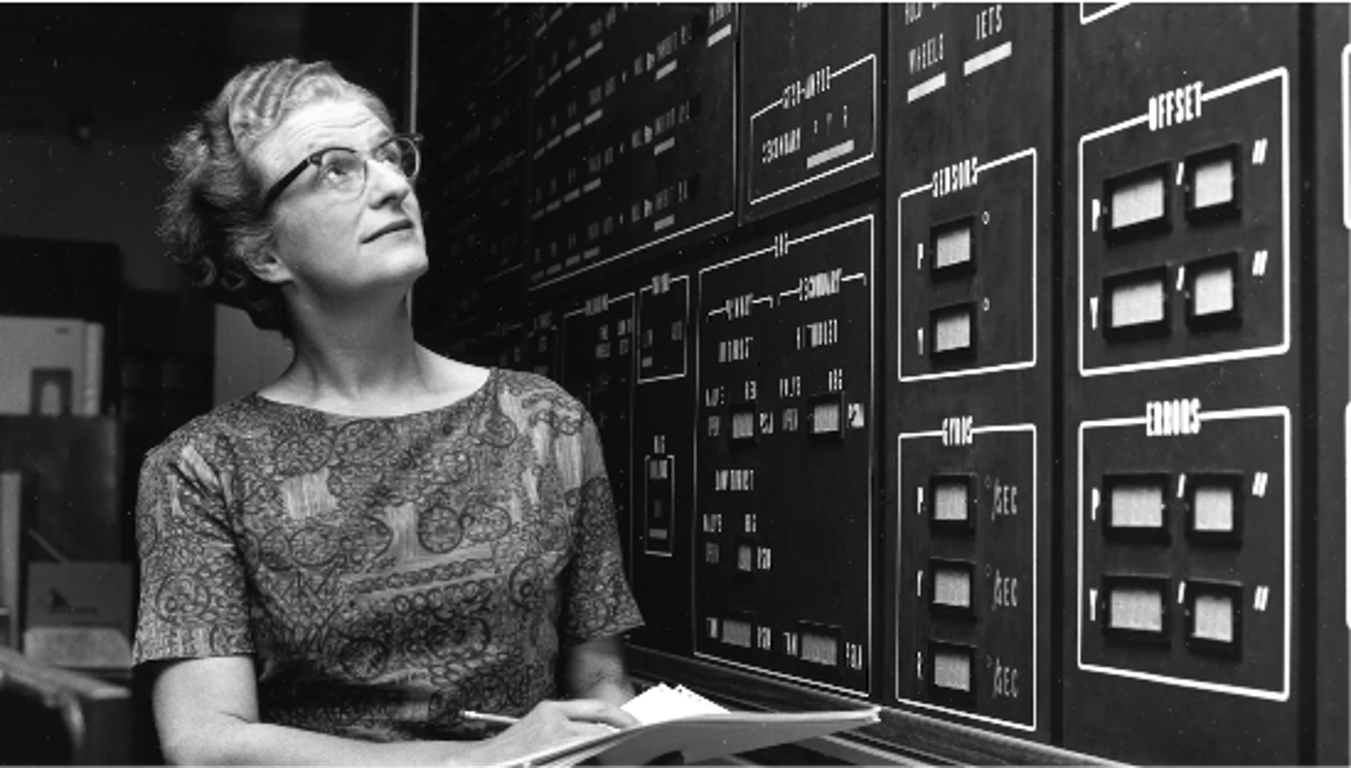
 (image credit: NASA)
As the Nancy Grace Roman Space Telescope launched today, 30 August 2026, it is worth recalling the remarkable scientist and NASA leader whose name it bears. Dr Nancy Grace Roman did not merely contribute to a single mission. She helped create the institutional foundations of space astronomy in the United States. As NASA’s first Chief of Astronomy, and its first female executive, she persuaded scientists, and political decision-makers that placing observatories above Earth’s atmosphere could transform our understanding of the universe. Her work was central to the vision that ultimately produced the Hubble Space Telescope, earning her the enduring title “the Mother of Hubble.” Through Hubble, Nancy Grace Roman helped open humanity’s eyes to the awe-inspiring scale, beauty and complexity of the Universe. Her legacy invites us to look upwards with both scientific curiosity and humility, wondering at the extraordinary order and mystery of creation, and at our own small but privileged place within it.
The timing has been marked by a new poem and musical tribute, She Opened the Heavens, shared with the BIS by Isabel C. Carro-Toro of the American Industrial Acquisition Corporation. The work celebrates Roman as both a pioneering astronomer and a formidable advocate for the space-based observatories that now sit at the heart of modern astrophysics. It was premiered at a pre-launch gathering at NASA’s Goddard Space Flight Center attended by space-telescope scientists and their families, quite an appropriate setting for a tribute to a woman whose influence can be felt across generations of NASA missions.
A childhood curiosity
Nancy Grace Roman was born on 16 May 1925 in Nashville, Tennessee, and spent much of her childhood moving between different parts of the United States as her father’s work required. Her interest in the night sky emerged early. At the age of 11, she formed an astronomy club with friends in Nevada, arranging meetings and learning about constellations. It was the beginning of a lifelong fascination with the stars, and an early indication of her ability to organise people around a shared scientific purpose.
Roman pursued mathematics and astronomy at a time when women faced overt and entrenched barriers in science. She studied astronomy at Swarthmore College, a liberal arts university in Pennsylvania, graduating in 1946, before receiving her doctorate in astronomy from the University of Chicago in 1949. Her scientific work focused on stellar astronomy, including the motions, chemical composition and classification of stars. It was serious, productive research, but the career opportunities available to women astronomers were deeply restricted.
Roman later spoke frankly about the discrimination she encountered. When she sought an academic post, one departmental chair reportedly told her that the department would not consider a woman. Such experiences were neither isolated nor unusual in mid-twentieth-century science. Yet Roman persisted. First through research appointments and teaching, then through a move that would allow her influence to extend far beyond her own astronomical investigations.
Building space astronomy
NASA was created in 1958, amid the Cold War and the dawning Space Age. In 1959, Roman joined the new agency and became its first Chief of Astronomy. The appointment made her NASA’s first female executive, but it also gave her an extraordinary opportunity: to establish a programme of astronomical research in space at a moment when the very idea remained novel and technically challenging. A challenge met similarly by the founders of the British Interplanetary Society in the 1930s, who had long argued that ideas once regarded as speculative – spaceflight, orbital vehicles and exploration beyond Earth – could be transformed into serious scientific and engineering programmes.
For ground-based astronomers, Earth’s atmosphere is both a window and an obstacle. It distorts incoming light, limiting sharpness, and blocks most radiation outside the visible part of the spectrum. Ultraviolet light, X-rays, gamma rays, and much infrared radiation cannot be studied properly from the ground. Roman saw that satellites and space telescopes could remove these limitations, allowing astronomers to study the universe with radically greater clarity and across a much wider range of wavelengths.
Her role was not simply administrative. Roman had to convince the scientific community that NASA should invest in astronomy and ensure that the resulting data served the broader research community. Indeed, she became a powerful champion of open scientific access, arguing that observations from publicly funded space missions should be widely available rather than controlled by a narrow group of researchers. That principle is now fundamental to major space-science programmes.
The mother of Hubble
Roman is most widely remembered for the role she played in bringing the Hubble Space Telescope from imagination, through aspiration, to reality. The concept of a large astronomical telescope in orbit had been discussed for decades, but turning it into an approved, funded, and workable mission demanded persistence over many years. Roman served as a bridge between astronomers who could define the scientific possibilities and the engineers, administrators, and political stakeholders who could make a mission happen.
She actively sought advice from the astronomy community, convening studies and helping develop the case for what became known as the Large Space Telescope. That project ultimately evolved into Hubble, launched in 1990 aboard Space Shuttle Discovery during the STS-31 mission. Roman had retired from NASA by then, but the observatory’s existence owed much to the programme-building work she had led during the 1960s and 1970s.
Hubble went on to become one of the most productive scientific instruments ever built. Its images and measurements changed public perceptions of the universe while reshaping professional astronomy. Hubble helped establish the accelerating expansion of the cosmos, and it charted the evolution of galaxies, observing stellar birth and death, and contributing to studies of exoplanets – worlds around other stars. The scale of that legacy makes the phrase “Mother of Hubble” more than just a ceremonial label!
Her contribution was broader still. NASA credits her as a driving force behind the ‘Great Observatories’ programme which showed how much more complete the universe becomes when observed across the electromagnetic spectrum with Hubble in ultraviolet, visible, and near-infrared light, the Compton Gamma Ray Observatory, the Chandra X-ray Observatory, and the Spitzer Space Telescope in infrared light.
Why Roman bears her name
NASA formally named the mission the Nancy Grace Roman Space Telescope in 2020 (abbreviated to Roman). Before that, it was known as WFIRST – the Wide Field Infrared Survey Telescope. The new name recognises Nancy Grace Roman’s scientific achievements, her role in establishing NASA’s space-astronomy programme and, above all, her ability to convert a bold idea – astronomy beyond Earth’s atmosphere – into a durable national capability.
The choice is particularly fitting because Nancy Grace Roman’s own approach to astronomy was expansive. And while Hubble is famous for deep, detailed views of carefully selected targets. Roman will complement it with a much wider view as its Wide Field Instrument will image areas of sky at least 100 times larger than Hubble can see in a single observation, enabling enormous surveys of galaxies, stars, and planetary systems. Indeed, NASA expects it to gather light from around a billion galaxies during its mission.
Roman will investigate some of the largest unanswered questions in cosmology: what dark energy is, why cosmic expansion is accelerating, and how matter is distributed through the universe. It will also search for and characterise exoplanets while its Coronagraph instrument will demonstrate technologies designed to block a star’s glare and directly image exoplanets and planet-forming discs.
A legacy of possibility
Nancy Grace Roman died on 25 December 2018, two years before NASA announced that its next flagship wide-field observatory would bear her name. Her legacy is scientific but, perhaps above all else, she opened doors for women in astronomy and space science at a time when many institutions sought to close them. She also demonstrated that the future of exploration depends not only on those who make discoveries, but on the people who build the programmes, alliances, and confidence that make great discoveries achievable.
Today’s launch occurred at 07:26 EDT (12:26 BST) from Launch Complex 39A at NASA’s Kennedy Space Center, with Roman travelling aboard a SpaceX Falcon Heavy rocket. Its destination is the Sun–Earth L2 region, about 1.5 million kilometres beyond Earth in the direction opposite the Sun, where it will begin its wide-ranging survey of the cosmos.
For the BIS community, Nancy Grace Roman’s life offers a powerful reminder that visionary spaceflight is not only about hardware and launch vehicles. It also depends on the people who can recognise a transformative idea, articulate its value, and patiently build the support needed to make it real – all patently parallel to the British Interplanetary Society’s own mission. Nancy Grace Roman did that for space astronomy. The telescope that now carries her name will extend that work, turning a wider and more sensitive eye towards the universe she helped humanity learn to see in awe.
John Lewin