
The eyes of the world are on NASA.
As NASA’s first crewed mission of the Artemis lunar exploration programme – Artemis II is about to launch, the public naturally focuses on the launch day itself: Yet, the most critical work began weeks earlier, when the fully assembled rocket leaves the Vehicle Assembly Building and began its first slow journey to the launch pad.
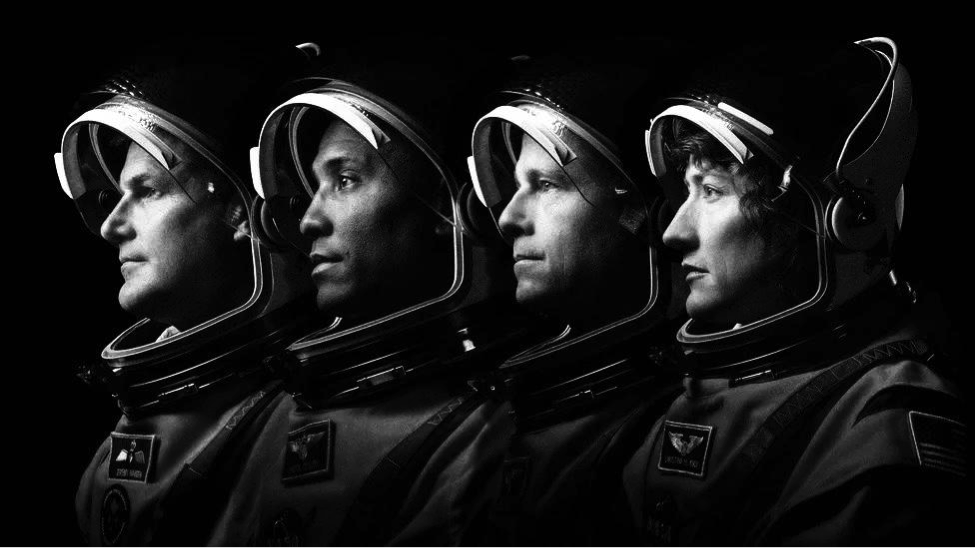
Artemis II is scheduled, no earlier than, April 1st 2026, with further opportunities in a short launch window. This mission will carry four astronauts: NASA’s Reid Wiseman, Victor Glover and Christina Koch and Canadian Space Agency’s Jeremy Hansen. They will be on a (approx) 10-day lunar flyby that tests the Space Launch System (SLS) and Orion spacecraft deep in space before future lunar landings.
Even though everyone focuses on the liftoff, the launch campaign is actually where the lunar mission truly begins. This is when the rocket becomes an integrated launch system made up of spacecraft, rocket, ground infrastructure and flight teams working in sync.
For Artemis II the process starts when the fully stacked launch vehicle – NASA’s SLS carrying the Orion spacecraft is transported from the Vehicle Assembly Building to Launch Pad 39B at Kennedy Space Center in Florida. The rocket is the mounted on a mobile launcher and carried by a massive crawler-transporter along a specially built road to the pad. The goal is not speed, but protecting the vehicle from vibration, wind loads and structural stress as it transitions from assembly to launch operations.
Once at the launch pad, the rocket and spacecraft are connected to pad systems that provide power, data, communications and propellant lines, transforming the pad into a large testing environment for the integrated launch system. Although the rocket is fully built, it still has to pass through a series of integrated checks that can only be done at the pad. These include verifying communication links between spacecraft, rocket and ground systems, testing the emergency off-load and safety systems, and ensuring that the launch infrastructure itself is functioning correctly.
One of the most important steps in this phase is the Wet Dress Rehearsal – a full practice run of the launch countdown without the crew aboard. During this test, teams load the rocket with super-cold liquid oxygen and liquid hydrogen propellants and run the countdown up to just before engine ignition. The goal is not to launch but to demonstrate that the vehicle can be fuelled, pressurised, monitored and safely drained again.
These rehearsals are essential because cryogenic propellants behave very differently from ordinary fuels: they boil, expand, contract and require specialised handling. Only by chilling thousands of feet of plumbing and systems down to launch-like conditions can engineers uncover issues that might not show up on the assembly line.
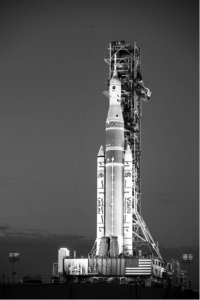
Roll-out and Roll-back – Artemis II’s rocket rolls out to the pad so early because problems are expected. Valves stick, sensors disagree with software, and ground systems need to be coordinated precisely. NASA builds time into the schedule so these issues can be resolved long before the crew ever climbs aboard. In some cases, if additional work is needed after pad testing, the rocket may even be rolled back to the VAB for adjustment before returning to the pad for launch, as did happen.
By the time launch day arrives, most of the complex engineering work has already been done.
Launch day itself is primarily about verification and timing checking systems one last time, synchronising teams and working toward the launch window. NASA runs its countdown using both an “L-minus” clock counting down to liftoff and a “T-minus” sequence that includes planned holds. These holds give engineers and flight controllers structured pauses to confirm that weather, range safety, rocket systems and ground systems are all within acceptable limits.
Throughout the countdown, flight controllers conduct formal “go/no-go” polls. A single “no-go” from propulsion, communications, weather or safety is enough to pause or cancel an attempt. This conservative culture isn’t a weakness, it is what makes human spaceflight possible and safe. If all conditions remain favourable and the launch window opens, the final sequence runs
automatically, engines ignite, and Artemis II lifts off, marking the end of weeks of careful preparation and the beginning of humanity’s next journey toward the Moon.
Now, as less than two weeks separates NASA from returning astronauts around the Moon, we can at least have a better understanding of what goes behind the scenes in the launch process.
Houston? Are we ‘Good to GO!’?…
Article by Otilia Dogaru