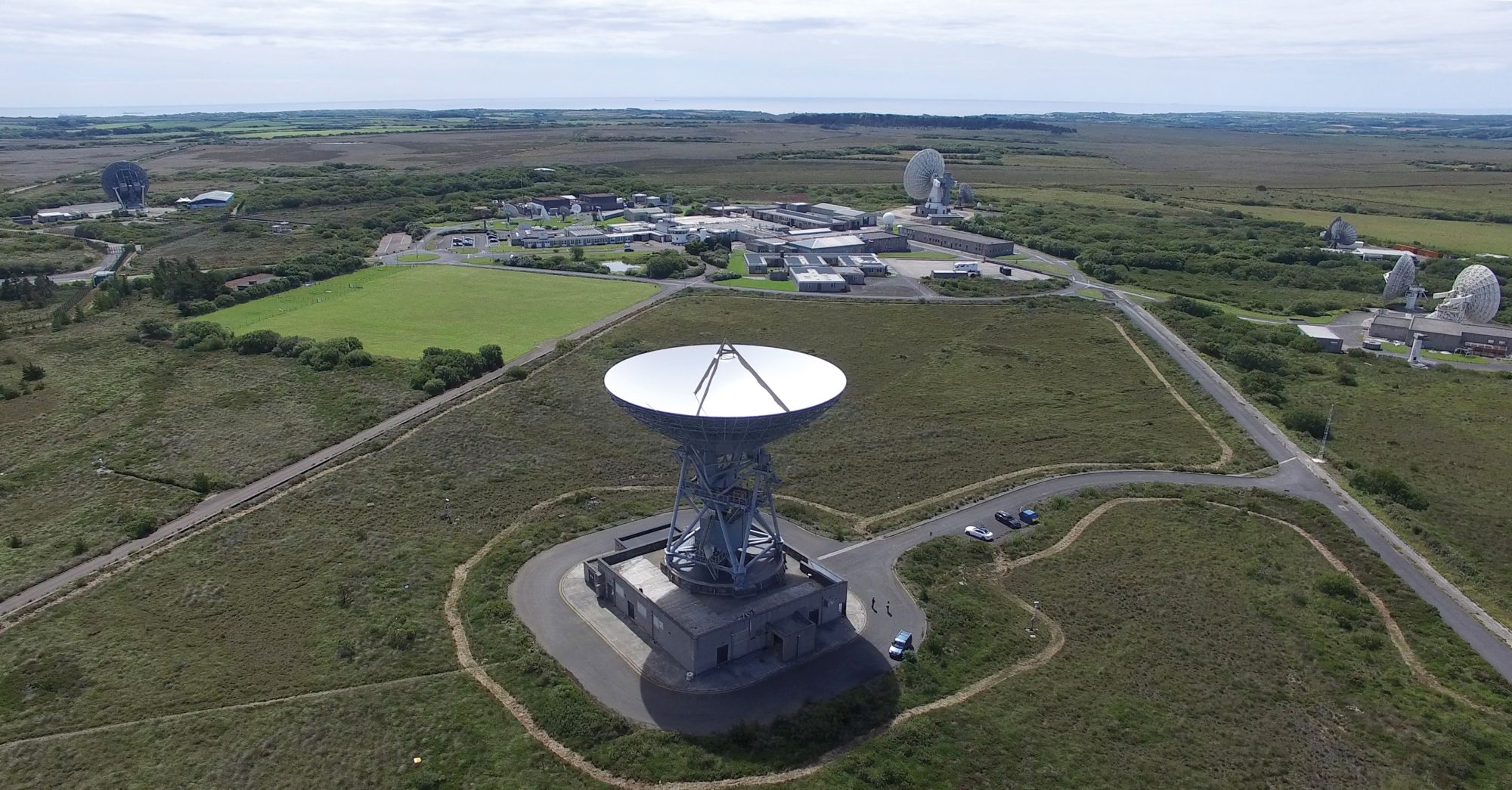
 Goonhilly Satellite Earth Station has gone from broadcasting Apollo 11 to tracking the astronauts who’ll follow in their footsteps.
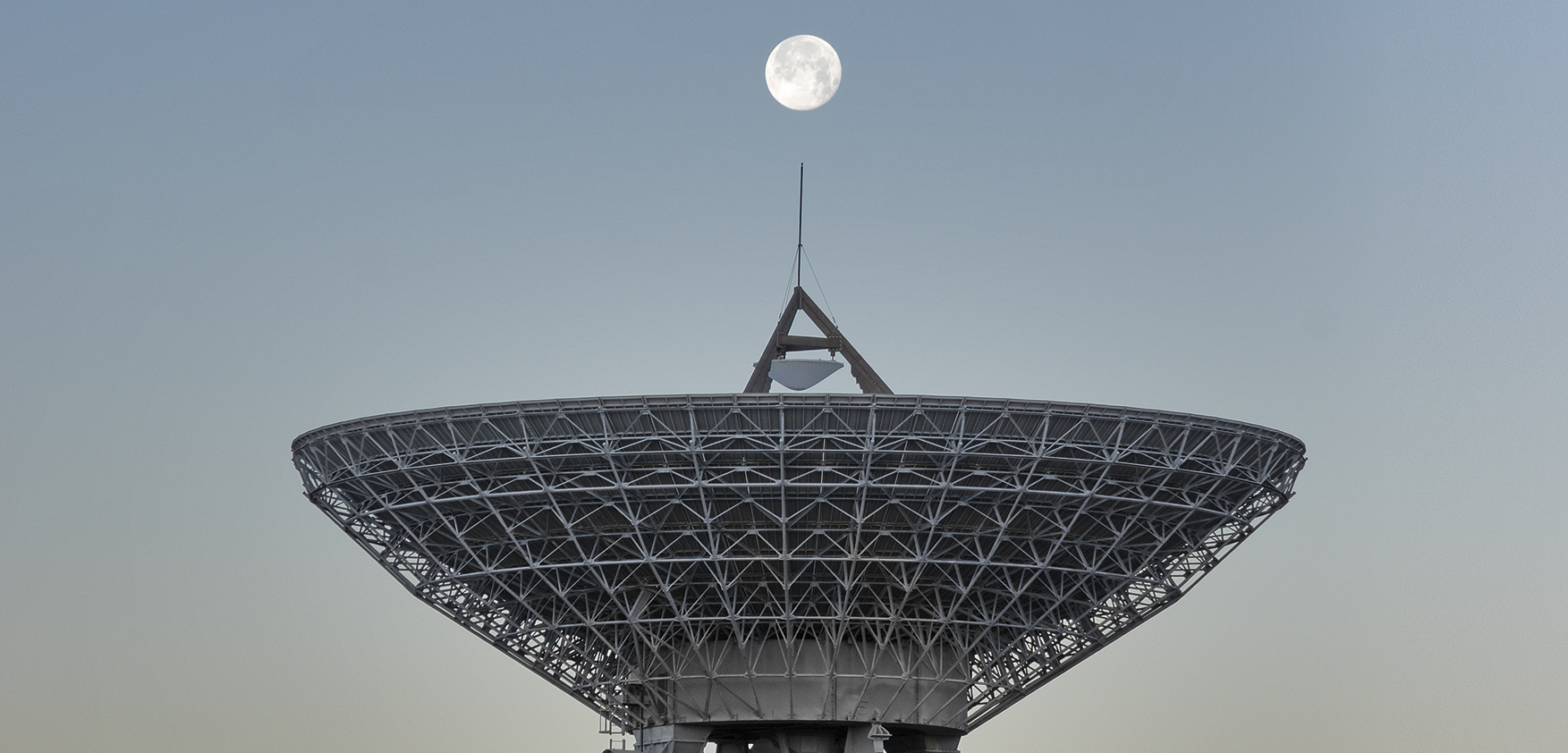 Goonhilly Satellite Earth Station has gone from broadcasting Apollo 11 to tracking the astronauts who’ll follow in their footsteps.
Goonhilly Earth Station sits on Goonhilly Downs near Helston on the Lizard Peninsula in Cornwall, and was once the largest satellite earth station in the world.
Their first dish, Arthur, which was built in 1962 to communicate with the Telstar satellite, was the world’s first parabolic satellite communications antenna, and on 11 July 1962 it received the first live transatlantic television broadcasts from the United States. Over the following decades, Arthur and the growing array of dishes – many named after Arthurian and Cornish legends – broadcast some of the landmark events of the 20th century, from the Apollo 11 Moon landing to the Live Aid concert in 1985.
British Telecoms shut down satellite operations on the site in 2008, but Goonhilly Earth Station Ltd took ownership in 2014 and has since pivoted the site towards deep space communications, earth observation, and science – bringing it firmly back into the space age ahead of Artemis II.
For Artemis II, Goonhilly’s role is passive tracking rather than the active communications work it carried out on Artemis I, and its participation is being undertaken on a voluntary basis. Using its 32-metre GHY-6 antenna, the station will passively follow the Orion spacecraft as it carries the four Artemis astronauts on a loop around the Moon and back to Earth.
Mission operations engineer Ollie Hancock summed up the buzz on site:
Four people going round the Moon is quite a big deal, so it feels kind of strange that you can be sat down on the Lizard looking at a computer screen seeing that data come back.
Goonhilly is also working with the UK Space Agency and NASA on possible downlink arrangements for near-real-time space weather data from NASA’s Interstellar Mapping and Acceleration Probe (IMAP), positioned at the Sun-Earth Lagrange Point 1. This mission includes a magnetometer designed and built by Imperial College London.
Building on Artemis I
In 2022, Goonhilly provided critical communication and tracking support for Artemis I, tracking the uncrewed Orion spacecraft and communicating with six of the CubeSats launched on that mission. Also, Goonhilly’s ‘Merlin’ antenna underwent an £8 million refurbishment in 2019 and the team hopes that successfully supporting Artemis II will enable them to play an even bigger part when astronauts actually walk on the Moon in future missions.